
posted by Saskia at 11/28/2004 07:33:00 AM | Permanent Link |
0 comments


Sunday, November 28, 2004
Wednesday, November 24, 2004
hmmmmmmmmmm.....
| Personality Disorder Test Results
|
personality tests by similarminds.com
posted by Saskia at 11/24/2004 04:17:00 PM | Permanent Link |
0 comments
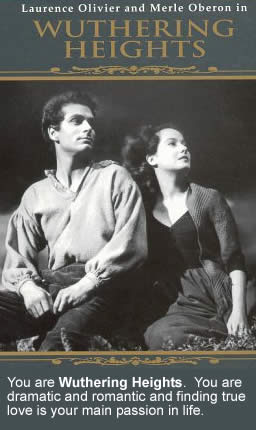
Personality Test - Ha Ha Ha

posted by Saskia at 11/24/2004 04:05:00 PM | Permanent Link |
0 comments
Wednesday, November 03, 2004
World reacts to Bush victory
Chicago Tribune | World reacts to Bush victory
World reacts to Bush victory
By Tom Hundley
Tribune foreign correspondent
Published November 3, 2004, 1:41 PM CST
LONDON -- It was their election too. Even though the rest of the world didn't have a say in the outcome of the U.S. presidential election, it surely had a stake in it.
Newspapers from around the world dispatched their reporters to the battleground states of Ohio, Florida and Pennsylvania. On Tuesday night and well into Wednesday broadcasters in Britain, France and Japan covered the election as if it were their own.
"A Day That Will Decide the Fate of the World" declared the banner headline in the Independent, a British Daily.
But as the day came and went with George W. Bush seemingly elected but the outcome in Ohio still in doubt, news of the American election again became a lesson in the arcana of foreign civics, with announcers trying to explain not just the electoral college but also Ohio's provisional ballots.
The Japanese found the concept particularly obscure because they don't have voter registration. Everyone automatically receives a voter card at age 20 in the form of a national identification card, or koseki.
"In America," one television announcer explained with wry surprise, "they don't have the koseki system."
While American voters made their choice based on any number of issues ranging from the state of the economy and the war on terror to gay marriage and abortion rights, for the rest of the world there was only one real issue: George W. Bush.
In Europe especially, but also in the Middle East, Africa and much of Asia, President Bush is the most disliked and discounted American leader since the U.S. emerged as a dominant world power early in the 20th Century. His victory produced a sense of gloom and foreboding.
"For those who are great admirers of America, it's a sad day; it's like a death in the family," said Mairtin O'Muilleoir, a newspaper publisher in Belfast, Northern Ireland, who strongly disapproves of the war in Iraq. "I think America is weaker after this election. And an America divided against itself [is] not going to play any kind of beneficial role in the world," he said.
In France, perhaps the epicenter of European hostility to Bush, the feeling of despair was almost palpable.
"This is not going to make relationship on the two sides of the Atlantic any easier," said Guillaume Parmentier, director of the French Center on the United States.
"After the 2000 election, there was a feeling in Europe that, OK, he is a minority president, elected by one vote on the Supreme Court. Now that he is re-elected by a majority, Europeans will think, well, the Americans really want this guy," he said. "Four years ago, people could believe that Bush was a compassionate conservative, that he wanted a humble foreign policy. It's hard to believe that now."
British Prime Minister Tony Blair, Bush's closest ally in the Europe, told Parliament on Wednesday that he would push the American president to make a resolution of the Israeli-Palestinian conflict a top priority in his second term.
But in Middle East, there was little optimism.
Yassin al Dhari, an American studies professor at Baghdad University, said Bush's re-election ensures that "terrorism will remain in Iraq, and that terrorists will continue to be backed by neighboring countries opposed to U.S. occupation of Iraq."
In South Africa, where the cable television network aired Michael Moore's "Fahrenheit 9/11" on the eve of the election and most people support Sen. John Kerry, many said they were worried about the direction about the direction in which the U.S. was moving with Bush.
"We are better off with a U.S. president who looks at the world in a way that accepts the reality that we are all part of the world, that the U.S. is not the only player," said Khabele Matlosa, a senior analyst with the Electoral Institute of Southern Africa. "I don't think Mr. Bush, with all due respect, stands the continent in good stead."
But Greg Mills, director of the South African Institute of International Affairs, said the Bush victory was probably better news for Africa than a changeover in administrations.
In terms of concrete assistance, Bush has "offered a surprising amount of aid and trade concessions to Africa as well as assistance with HIV/AIDS," said Mills.
Compared to the Democrats, who seized on protectionist rhetoric during the campaign, "the Republicans offer more in terms of trade, and in Africa trade equals growth and growth is what it's all about on this continent," he said.
In China, Bush's victory created little stir, with most people interested mainly in U.S. policy toward China's rival, Taiwan.
"I don't care who is president as long as he helps return Taiwan to us," said Sun Ping, a 58-year old construction worker who followed the news on the radio.
But there were fireworks earlier in the week when the China Daily, the English-language government mouthpiece, published a scathing critique of the Bush administration by a former foreign minister, who lambasted what he characterized as the White House attempt to rule the world by force.
Although the attack was disavowed by the government, it set off a debate on the extent to which it characterized Beijing's real views and whether its timing would damage relations with Washington.
In India, the world's largest democracy, Bush's victory was seen as good for business.
Raja Mohan, a professor of South Asian studies at Jawaharal Nehru University in New Delhi, noted that India has done more business with the U.S. in the last four years than in the previous 40.
"We believe the relationship is poised for a significant expansion," Mohan said, "and the return of Bush raises that prospect."
Tribune foreign correspondents Michael A. Lev in Beijing, Laurie Goering in Johannesburg, Kim Barker in New Delhi and Alex Rodriguez in Baghdad contributed to this report. Dhiya Rasan in Baghdad also contributed.
World reacts to Bush victory
By Tom Hundley
Tribune foreign correspondent
Published November 3, 2004, 1:41 PM CST
LONDON -- It was their election too. Even though the rest of the world didn't have a say in the outcome of the U.S. presidential election, it surely had a stake in it.
Newspapers from around the world dispatched their reporters to the battleground states of Ohio, Florida and Pennsylvania. On Tuesday night and well into Wednesday broadcasters in Britain, France and Japan covered the election as if it were their own.
"A Day That Will Decide the Fate of the World" declared the banner headline in the Independent, a British Daily.
But as the day came and went with George W. Bush seemingly elected but the outcome in Ohio still in doubt, news of the American election again became a lesson in the arcana of foreign civics, with announcers trying to explain not just the electoral college but also Ohio's provisional ballots.
The Japanese found the concept particularly obscure because they don't have voter registration. Everyone automatically receives a voter card at age 20 in the form of a national identification card, or koseki.
"In America," one television announcer explained with wry surprise, "they don't have the koseki system."
While American voters made their choice based on any number of issues ranging from the state of the economy and the war on terror to gay marriage and abortion rights, for the rest of the world there was only one real issue: George W. Bush.
In Europe especially, but also in the Middle East, Africa and much of Asia, President Bush is the most disliked and discounted American leader since the U.S. emerged as a dominant world power early in the 20th Century. His victory produced a sense of gloom and foreboding.
"For those who are great admirers of America, it's a sad day; it's like a death in the family," said Mairtin O'Muilleoir, a newspaper publisher in Belfast, Northern Ireland, who strongly disapproves of the war in Iraq. "I think America is weaker after this election. And an America divided against itself [is] not going to play any kind of beneficial role in the world," he said.
In France, perhaps the epicenter of European hostility to Bush, the feeling of despair was almost palpable.
"This is not going to make relationship on the two sides of the Atlantic any easier," said Guillaume Parmentier, director of the French Center on the United States.
"After the 2000 election, there was a feeling in Europe that, OK, he is a minority president, elected by one vote on the Supreme Court. Now that he is re-elected by a majority, Europeans will think, well, the Americans really want this guy," he said. "Four years ago, people could believe that Bush was a compassionate conservative, that he wanted a humble foreign policy. It's hard to believe that now."
British Prime Minister Tony Blair, Bush's closest ally in the Europe, told Parliament on Wednesday that he would push the American president to make a resolution of the Israeli-Palestinian conflict a top priority in his second term.
But in Middle East, there was little optimism.
Yassin al Dhari, an American studies professor at Baghdad University, said Bush's re-election ensures that "terrorism will remain in Iraq, and that terrorists will continue to be backed by neighboring countries opposed to U.S. occupation of Iraq."
In South Africa, where the cable television network aired Michael Moore's "Fahrenheit 9/11" on the eve of the election and most people support Sen. John Kerry, many said they were worried about the direction about the direction in which the U.S. was moving with Bush.
"We are better off with a U.S. president who looks at the world in a way that accepts the reality that we are all part of the world, that the U.S. is not the only player," said Khabele Matlosa, a senior analyst with the Electoral Institute of Southern Africa. "I don't think Mr. Bush, with all due respect, stands the continent in good stead."
But Greg Mills, director of the South African Institute of International Affairs, said the Bush victory was probably better news for Africa than a changeover in administrations.
In terms of concrete assistance, Bush has "offered a surprising amount of aid and trade concessions to Africa as well as assistance with HIV/AIDS," said Mills.
Compared to the Democrats, who seized on protectionist rhetoric during the campaign, "the Republicans offer more in terms of trade, and in Africa trade equals growth and growth is what it's all about on this continent," he said.
In China, Bush's victory created little stir, with most people interested mainly in U.S. policy toward China's rival, Taiwan.
"I don't care who is president as long as he helps return Taiwan to us," said Sun Ping, a 58-year old construction worker who followed the news on the radio.
But there were fireworks earlier in the week when the China Daily, the English-language government mouthpiece, published a scathing critique of the Bush administration by a former foreign minister, who lambasted what he characterized as the White House attempt to rule the world by force.
Although the attack was disavowed by the government, it set off a debate on the extent to which it characterized Beijing's real views and whether its timing would damage relations with Washington.
In India, the world's largest democracy, Bush's victory was seen as good for business.
Raja Mohan, a professor of South Asian studies at Jawaharal Nehru University in New Delhi, noted that India has done more business with the U.S. in the last four years than in the previous 40.
"We believe the relationship is poised for a significant expansion," Mohan said, "and the return of Bush raises that prospect."
Tribune foreign correspondents Michael A. Lev in Beijing, Laurie Goering in Johannesburg, Kim Barker in New Delhi and Alex Rodriguez in Baghdad contributed to this report. Dhiya Rasan in Baghdad also contributed.
posted by Saskia at 11/03/2004 02:34:00 PM | Permanent Link |
0 comments
Faces of the fallen...

Faces of the fallen
excerpts from Black Eyed Peas "where is the love".
....
Nations droppin' bombs
Chemical gasses fillin' lungs of little ones
With the ongoin' sufferin' as the youth die young
So ask yourself is the lovin' really gone
So I could ask myself really what is goin' wrong
In this world that we livin' in people keep on givin' in
Makin' wrong decisions, only visions of them dividends
Not respectin' each other, deny thy brother
A war is goin' on but the reason's undercover
The truth is kept secret, it's swept under the rug
If you never know truth then you never know love
...........
Selfishness got us followin' in the wrong direction
Wrong information always shown by the media
Negative images is the main criteria
Infecting the young minds faster than bacteria
.....
posted by Saskia at 11/03/2004 06:28:00 AM | Permanent Link |
0 comments
Tuesday, November 02, 2004
Musicplasma.com
Learn what bands you may like at www.musicplasma.com -- just type in your faves, and it'll graphically show you what groups are related to them.
posted by Saskia at 11/02/2004 05:30:00 PM | Permanent Link |
0 comments
caffeinated sodas & P2P4U - TSS
Apparently, our video feed somehow crossed with QVC’s as Kevin and Alex reviewed the latest super-caffeinated sodas…
“What's wrong, Kevin?” asked Alex.
“It's these late-night Screensavers' blowouts. Combined with a full day of constant mouse-clicking, the shuffling of papers, and with my active grandchildren, I just can't keep up. How do you do it, Alex?”
“Well Kevin, I'm glad you asked. What if I told you there was a way to fully embrace this rock-star lifestyle without giving up the Jazzercise you and I both love so much?”
“I'd call you a BLEEP -ing liar!”
“Well, hold on there, turbo -- I'm about to show you my five secrets to success, or ‘The Jitters,’ as I like to call it,” said Alex before launching it a very convincing sales pitch for the following Top 5 Caffeinated Drinks:
5. Jolt Cola
4. Bawls Guarana
3. Brain Wash
2. Black Lemonade
1. Fukola Cola
To buy these sodas online, try http://www.popsoda.com or http://www.sodapopstop.com.
There are lots of peer-to-peer software apps for file sharing out there, but around 90 percent of them are loaded with adware, spyware, trackware, etc. So Kevin hunted down four P2P applications that work well and don’t bog down your computer:
Shareaza (www.shareaza.com): Allows you to connect to multiple networks as well as BitTorrent. Also integrates a media player that works well.
KaZaA Lite (warezfu.us): Takes out the adware of the current version of KaZaA; it’s a hacked version, but it works well.
SoulSeek (www.slsknet.org): Known for its selection of underground hip hop and indie music.
WinMX (www.winmx.com): It has a very clean interface.
posted by Saskia at 11/02/2004 05:25:00 PM | Permanent Link |
0 comments
Website Copier
Httrack webiste copier
HTTrack is a free (GPL, libre/free software) and easy-to-use offline browser utility.
It allows you to download a World Wide Web site from the Internet to a local directory, building recursively all directories, getting HTML, images, and other files from the server to your computer. HTTrack arranges the original site's relative link-structure. Simply open a page of the "mirrored" website in your browser, and you can browse the site from link to link, as if you were viewing it online. HTTrack can also update an existing mirrored site, and resume interrupted downloads. HTTrack is fully configurable, and has an integrated help system.
I usually use "spiderzilla" - add-on to Mozilla.
HTTrack is a free (GPL, libre/free software) and easy-to-use offline browser utility.
It allows you to download a World Wide Web site from the Internet to a local directory, building recursively all directories, getting HTML, images, and other files from the server to your computer. HTTrack arranges the original site's relative link-structure. Simply open a page of the "mirrored" website in your browser, and you can browse the site from link to link, as if you were viewing it online. HTTrack can also update an existing mirrored site, and resume interrupted downloads. HTTrack is fully configurable, and has an integrated help system.
I usually use "spiderzilla" - add-on to Mozilla.
posted by Saskia at 11/02/2004 05:15:00 PM | Permanent Link |
0 comments
Google Me!
Previous Posts
- Shaddap You Face - Joe Dolce
- Identifying falsified images can be straightforwar...
- Google Talk - Tons of screenshots...
- Sturgis Motorcycle Rally was an eye-opening experi...
- Lindsay
- Jacqueline
- Frederick
- Hansemann
- Yuna
- Stairway to Heaven Backwards
Archives
- August 2004
- September 2004
- October 2004
- November 2004
- December 2004
- January 2005
- February 2005
- March 2005
- May 2005
- August 2005
- December 2005
Feeds

Saskia's blog is made possible with the help of:

